
BMI Calculator
Calculate your body mass index (BMI)
Calculate your body mass index (BMI) with confidence using our trusted, medically-accurate tool, designed to provide you with a clear and reliable health snapshot in seconds. We utilize the precise formula endorsed by global health authorities like the World Health Organization (WHO) and the Centers for Disease Control and Prevention (CDC) to ensure your result is both current and clinically valid. Our commitment to your trust goes beyond the calculation; we offer straightforward explanations of your BMI category and its general health implications, all within a secure and completely private environment. We believe in empowering you with honest information, which is why we transparently explain BMI’s role as a population screening tool and its limitations regarding individual factors like muscle mass. This approach allows you to use your result as a informed starting point for a conversation with your healthcare provider.
BMI (Body Mass Index)
Body Mass Index (BMI) is a universally recognized health metric that provides a quick, standardized assessment of body weight relative to height. Calculated by dividing an individual’s weight in kilograms by the square of their height in meters (kg/m²), it offers a simple numerical value used worldwide by leading health authorities including the World Health Organization (WHO) and the Centers for Disease Control and Prevention (CDC) to categorize weight status into ranges such as underweight, healthy weight, overweight, and obese. Our trusted platform uses this medically validated formula to deliver accurate, instant results that serve as a helpful starting point for understanding general health trends. However, we believe in transparency and empowerment: while BMI is a valuable population-level screening tool, it does not differentiate between muscle and fat mass, meaning athletes or individuals with higher muscle density may receive a higher classification that does not reflect their true health. That’s why we encourage using your BMI result as one piece of a holistic health picture, complemented by measures like waist circumference, body composition analysis, and consultation with a healthcare professional. Developed with precision, privacy, and user clarity in mind, our calculator ensures your data is secure and your insight is reliable helping you make informed, confident decisions on your wellness journey.
BMI Calculator Definition
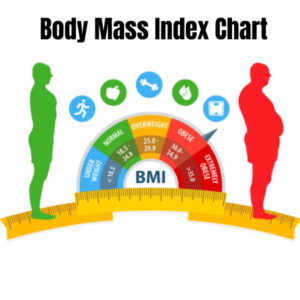
BMI Calculator
BMI (Body Mass Index) Calculator is a simple tool that helps you measure your body fat based on your height and weight. It provides a quick way to determine whether you are underweight, normal weight, overweight, or obese. The BMI value is calculated by dividing your weight (in kilograms) by your height (in meters squared). BMI is an essential health indicator used worldwide by doctors and fitness experts. It helps you understand if your body weight is in a healthy range for your height, which can reduce the risk of diseases like diabetes, heart problems, and high blood pressure.
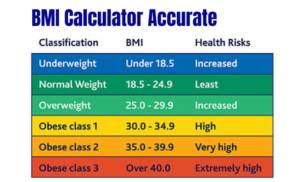
How do you read a BMI Chart
A BMI chart is a simple tool to categorize a person’s weight based on their height and weight. Reading one typically involves just two steps: Locate Your Height: Find your specific height (usually in feet/inches or centimeters) in the leftmost column of the chart. Find Your Weight: Follow that row across until you find your current weight (usually in pounds or kilograms).
What is my BMI Female
Body Mass Index, is a simple screening tool that estimates body fat based on your height and weight. For females, the calculation is the same as for males: weight in kilograms divided by height in meters squared. The resulting number places you in a category like underweight, healthy weight, overweight, or obese. However, BMI does not distinguish between fat, muscle, or bone mass. Therefore, it’s a general guide and not a direct measure of body composition or health. For a more complete health assessment, consult a healthcare provider.
What is a Good BMI
Maintaining a healthy BMI is a fundamental indicator of overall well-being and a key component of preventive health. Calculated from an individual’s height and weight, a BMI between 18.5 and 24.9 falls within the healthy range, suggesting a lower risk for weight-related health issues. This simple measurement helps assess whether one is underweight, at a normal weight, overweight, or obese. Striving for a healthy BMI through balanced nutrition and regular physical activity is crucial for long-term wellness. It significantly reduces the risk of developing chronic conditions such as heart disease, type 2 diabetes, and certain cancers. Ultimately, understanding and managing your BMI is a proactive step towards a healthier, more vibrant life.
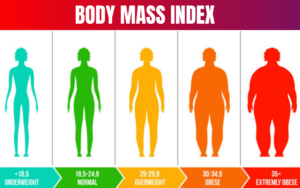
BMI Range refers to the categories used to interpret your Body Mass Index (BMI) value, helping determine whether your weight is underweight, normal, overweight, or obese. It is calculated by dividing your weight in kilograms by your height in meters squared (kg/m²). According to WHO and CDC standards, a BMI below 18.5 is considered underweight, 18.5–24.9 is normal, 25–29.9 is overweight, and 30 or above is obese. Understanding your BMI range is essential for assessing overall health and potential risk factors related to weight. It helps individuals maintain a healthy balance between diet, exercise, and lifestyle. Regularly tracking your BMI can guide better health choices and prevent long-term health issues.
BMI Formula
The Formula:
BMI = weight (kg) / [height (m)]²
Example in Metric:
-
Weight: 65 kg
-
Height: 1.70 m
-
Calculation: 65 / (1.70 * 1.70) = 65 / 2.89 = 22.5
Alternative Formula (using pounds and inches):
BMI = [weight (lbs) / height (in)²] x 703
Example in Imperial:
-
Weight: 140 lbs
-
Height: 65 inches
-
Calculation: [140 / (65 * 65)] x 703 = [140 / 4225] x 703 = 0.0331 x 703 = 23.3
BMI Categories (World Health Organization):
-
Underweight: BMI less than 18.5
-
Normal Weight: BMI 18.5 – 24.9
-
Overweight: BMI 25 – 29.9
-
Obesity Class I: BMI 30 – 34.9
-
Obesity Class II: BMI 35 – 39.9
-
Obesity Class III: BMI 40 or greater
Cost-Effective Tool
BMI calculation is inexpensive and requires no special equipment. This makes it an ideal first-step screening tool in clinical settings and for personal health monitoring.
Muscle vs. Fat Misrepresentation
BMI doesn’t distinguish between muscle and fat. Athletes with high muscle mass may be classified as overweight or obese, while individuals with normal BMI may have high body fat percentages.
Limited Demographic Accuracy
BMI may not account for ethnic differences in body composition. It also doesn’t consider age, sex, or bone structure, which can affect the interpretation of results across different populations.
Fat Distribution Ignored
BMI doesn’t indicate where fat is stored in the body. Visceral fat around organs is more dangerous than subcutaneous fat, but BMI cannot make this important distinction.
Quick & Easy Assessment
BMI provides a simple and fast method to screen for weight categories that may lead to health problems. It requires only two measurements – height and weight – making it accessible for everyone.
Population Health Tracking
BMI is valuable for tracking weight trends in large populations. It helps public health officials identify obesity trends and allocate resources effectively for community health initiatives.
Why is BMI Important?
BMI is an essential health indicator used worldwide by doctors and fitness experts. It helps you understand if your body weight is in a healthy range for your height, which can reduce the risk of diseases like diabetes, heart problems, and high blood pressure.
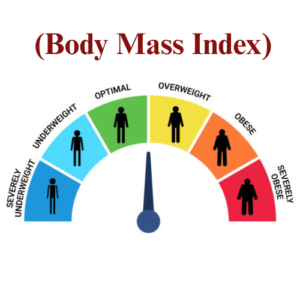
BMI formula
The Body Mass Index (BMI) formula is a simple mathematical calculation used to estimate a person’s total body fat based on their weight and height.
The universal formula for calculating BMI is:
BMI = weight (kg) / height (m)²
For the imperial system (using pounds and inches), the formula is adjusted as:
BMI = (weight (lbs) / height (in)²) x 703
BMI For a General Health & Wellness
Body Mass Index (BMI) is a widely used screening tool to categorize individuals based on their weight relative to their height. By simply entering your height and weight, our calculator provides a numerical value that places you in a standard weight status category, such as underweight, healthy weight, overweight, or obese. While it’s a useful starting point for assessing health risks associated with weight, it’s important to remember that BMI does not directly measure body fat percentage or account for factors like muscle mass, bone density, and overall body composition.
BMI For a Focusing on Health Risks and Medical Use
Healthcare professionals use Body Mass Index (BMI) as a quick, standardized method to identify potential weight-related health risks. A high BMI can be an indicator of increased susceptibility to conditions such as heart disease, high blood pressure, type 2 diabetes, and certain cancers. Conversely, a low BMI may signal other health concerns, including nutritional deficiencies or a weakened immune system. It serves as an initial screening tool to prompt further discussion with a doctor about a comprehensive health plan.
Additional insights for what’s my BMI calculator
When to Use BMI
BMI is best used as a general screening tool rather than a diagnostic measure. For a complete health assessment, combine BMI with other measurements like waist circumference, body fat percentage, and blood tests.
Better Alternatives
For more accurate health assessments, consider waist-to-hip ratio, body fat percentage measurements (DEXA scan, BIA), or waist circumference. These provide better indicators of health risks related to body composition.

BMI Table for Adults
This standard reference table classifies body weight status based on Body Mass Index (BMI) for individuals aged 20 and above. It provides ranges that correspond to categories such as Underweight, Normal weight, Overweight, and various Obesity classes. It is important to note that this table is a general screening tool and does not account for individual factors like muscle mass, bone density, or body composition. Therefore, it should be used as a starting point for understanding health risks associated with weight. For a comprehensive health assessment, it is always recommended to consult with a healthcare professional who can consider your unique circumstances. Use the calculator and table as guides, not as definitive diagnostic tools.
BMI Calculator FAQs
Find answers to common questions about Body Mass Index (BMI) and how to use our calculator
About BMI Calculation
BMI (Body Mass Index) is a measure of body fat based on height and weight that applies to adult men and women. It's calculated by dividing a person's weight in kilograms by the square of their height in meters (kg/m²).
For imperial units, the formula is: (weight in pounds / (height in inches)²) x 703.
Our calculator automatically handles both metric and imperial units, so you don't need to do any conversions.
For adults, BMI is categorized as follows:
| BMI Range | Category |
|---|---|
| Below 18.5 | Underweight |
| 18.5 - 24.9 | Normal weight |
| 25.0 - 29.9 | Overweight |
| 30.0 and above | Obese |
Note: These categories are for adults aged 20 and older. BMI interpretation for children and teens is different.
Yes, BMI interpretation for children and teens is different from adults. Instead of fixed categories, children's BMI is compared to percentiles for their age and gender.
The categories for children are:
- Underweight: BMI below the 5th percentile
- Healthy weight: BMI between 5th and 85th percentile
- Overweight: BMI between 85th and 95th percentile
- Obese: BMI at or above the 95th percentile
Our calculator automatically adjusts interpretation based on the age you enter.
Using the Calculator
Our BMI calculator uses the standard formulas endorsed by health organizations worldwide, so the calculations are mathematically accurate.
However, it's important to understand that BMI is a screening tool, not a diagnostic one. It provides a general indication of whether you're at a healthy weight, but it doesn't account for factors like muscle mass, bone density, or body composition.
Tip: For a more comprehensive health assessment, consider additional measurements like waist circumference, body fat percentage, and consultation with a healthcare provider.
We ask for gender and age to provide the most accurate interpretation of your BMI result:
- Gender: While the BMI calculation is the same for men and women, the interpretation may vary slightly due to physiological differences in body composition.
- Age: BMI interpretation is different for children and adults. For children, we use age- and gender-specific percentiles rather than fixed categories.
Yes! Our calculator allows you to easily switch between metric (centimeters and kilograms) and imperial (inches and pounds) units.
Simply click the "Metric" or "Imperial" buttons at the top of the calculator. The units will automatically update, and you can enter your measurements in your preferred system.
Health & Limitations
While BMI is a useful screening tool, it has several limitations:
- Muscle vs. Fat: BMI doesn't distinguish between muscle and fat, so athletes with high muscle mass may have a high BMI but low body fat.
- Fat Distribution: It doesn't account for where fat is located on the body, which is important for health risks.
- Age Considerations: It may not be as accurate for older adults who have lost muscle mass.
- Ethnic Differences: Some ethnic groups may have different health risks at the same BMI.
- Pregnancy: BMI is not accurate during pregnancy.
Yes, BMI can be misleading for athletes and very muscular individuals. Since muscle is denser and weighs more than fat, these individuals may have a high BMI that classifies them as overweight or obese, even though they have low body fat and are in excellent health.
If you're an athlete or have a muscular build, consider additional assessments like body fat percentage measurements or waist-to-hip ratio for a more accurate health evaluation.
For most adults, checking your BMI every 3-6 months is sufficient unless you're actively trying to change your weight. For children, regular monitoring (every 6-12 months) is recommended as they grow.
Remember: Focus more on developing healthy habits (balanced diet, regular exercise) rather than frequent BMI checks. Your overall health is more important than a single number.
If your BMI falls outside the normal range:
- Don't panic: BMI is just one indicator of health.
- Consult a professional: Speak with a healthcare provider for personalized advice.
- Focus on habits: Instead of quick fixes, work on sustainable lifestyle changes.
- Consider other factors: Look at your eating patterns, activity levels, sleep quality, and stress management.
Our calculator provides general guidance, but individual health needs vary. Always consult with a healthcare professional for personalized recommendations.
Leave a Reply